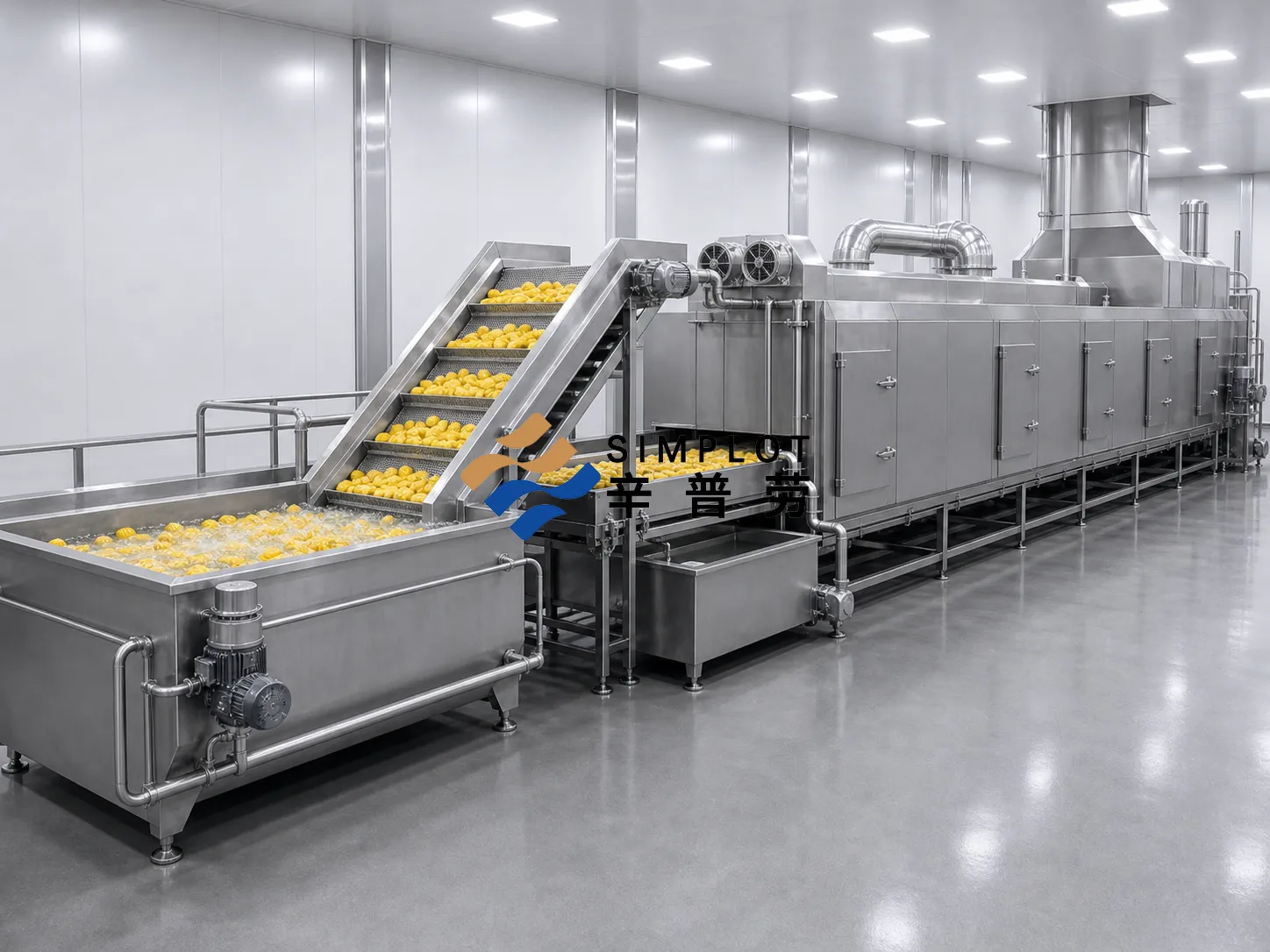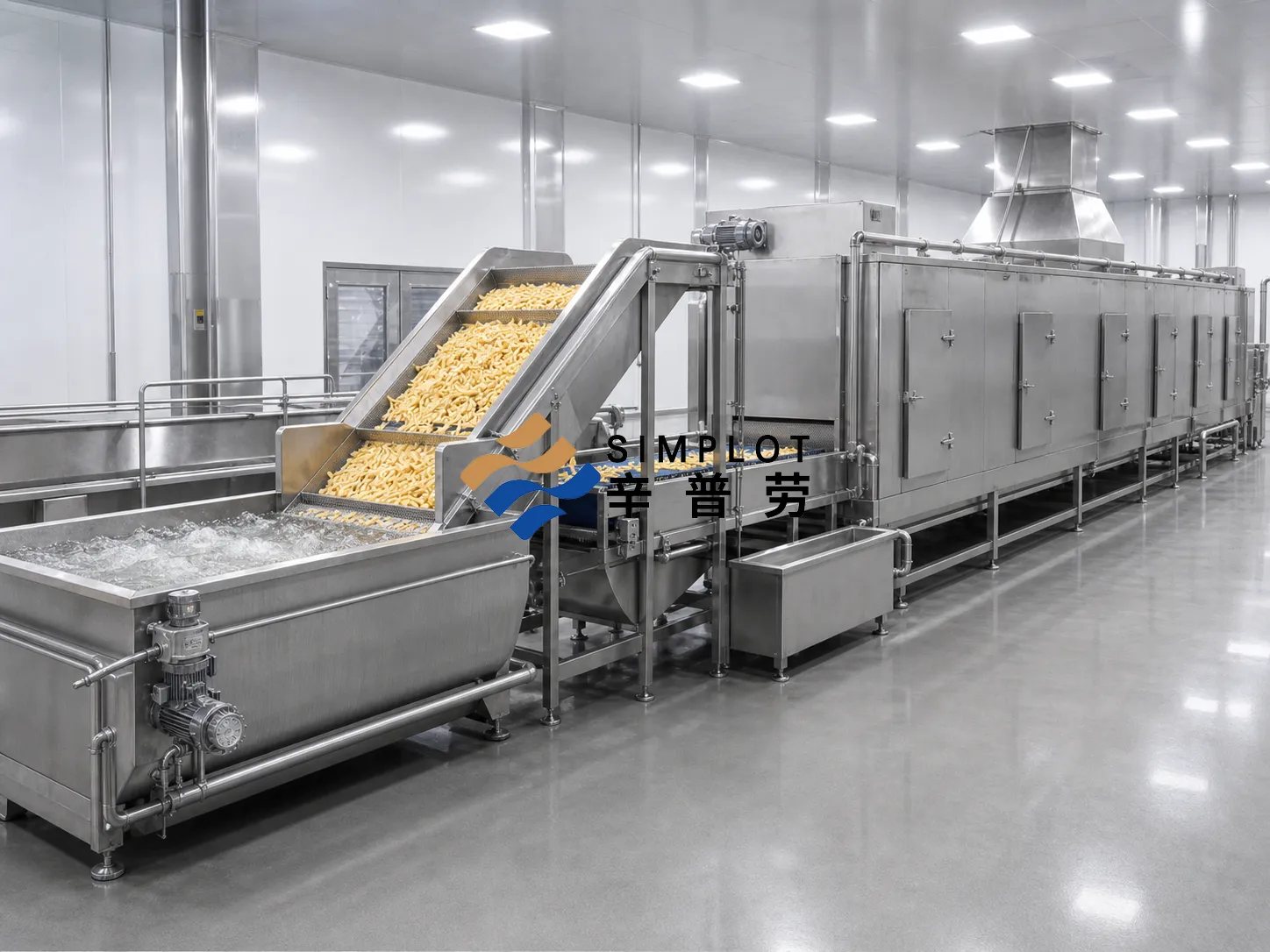
For frozen food manufacturers, freezing is much more than a preservation process. It directly influences product appearance, texture, shelf life, packaging efficiency, and final product value.
An IQF freezing line is widely used in modern food processing plants because it can freeze food pieces individually and quickly. Compared with traditional block freezing, IQF freezing helps reduce product sticking, maintain product shape, and make later weighing and packaging easier.
Whether your factory processes vegetables, fruits, seafood, meat products, prepared foods, French fries, or frozen snacks, selecting the right IQF freezing line is an important decision for long-term production efficiency.
This guide explains the key factors to consider before investing in an industrial IQF freezing system.
---
1. What Is an IQF Freezing Line?
IQF means Individual Quick Freezing.
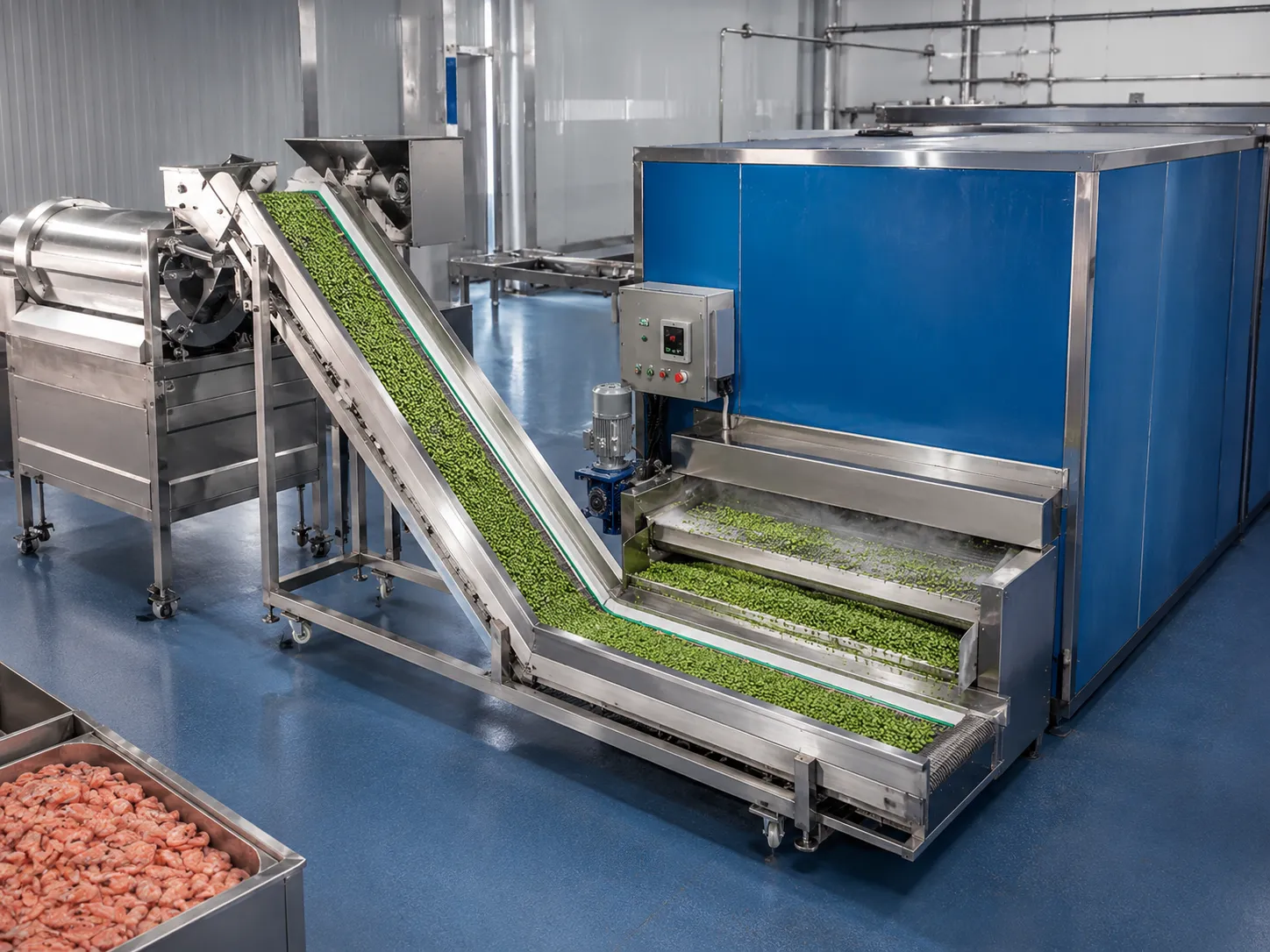
An IQF freezing line is a continuous freezing system designed to freeze food products piece by piece. Products are evenly fed onto a conveyor belt, pass through a low-temperature freezing tunnel, and are discharged as individually frozen products.
In a complete food processing plant, an IQF freezer is often connected with upstream equipment such as a vegetable and fruit washing processing line, blanching machine, cooling conveyor, dewatering machine, cutting machine, or frying system.
The main purpose of IQF freezing is to quickly reduce the product temperature while helping maintain the original color, shape, texture, and quality.
Typical products suitable for IQF freezing include diced vegetables, peas, corn kernels, strawberries, blueberries, shrimp, fish fillets, dumplings, chicken nuggets, French fries, potato wedges, and other frozen food products.
---
2. Why Food Factories Use IQF Freezing
Many food factories choose IQF freezing because it supports continuous production and helps keep product quality more stable.
The main advantages include:
- Fast freezing speed
- Reduced product clumping
- Better product appearance
- Improved texture and taste retention
- Easier weighing and packaging
- Suitable for small-piece and mixed products
- Better storage and transportation stability
- Continuous operation for industrial production
For products such as peas, corn, berries, shrimp, diced vegetables, dumplings, French fries, and coated snacks, it is important that each piece remains separate after freezing.
If products are frozen into large blocks, later packaging, portion control, cooking, and retail use become more difficult. IQF freezing helps solve this problem and improves the commercial value of frozen food products.
---
3. Choose Capacity According to Your Production Plan
Capacity is one of the first factors to confirm when selecting an IQF freezing line.
Common industrial capacity ranges include:
- 100–300 kg/h: suitable for small frozen food factories, pilot production, or start-up projects
- 500–1000 kg/h: suitable for medium-scale food processing plants
- 1500–2000 kg/h: suitable for large factories and continuous production
- Customized capacity: suitable for special products, special layouts, or higher output requirements
When choosing capacity, you should not only consider your current production demand. Future market growth, daily working hours, raw material supply, labor arrangement, packaging speed, and cold storage capacity should also be considered.
For example, if your current demand is about 500 kg/h but your sales volume is expected to increase, choosing a slightly larger IQF freezing line may help avoid replacing equipment too soon.
Simplot can design customized food processing solutions according to product type, factory space, required capacity, and production process.
---
4. Freezing Temperature and Final Product Quality
Freezing temperature plays an important role in IQF freezer performance.
For industrial IQF freezing systems, the temperature inside the freezing tunnel is usually very low, commonly around -35°C to -42°C. The actual temperature depends on product type, product thickness, moisture content, inlet temperature, and required output capacity.
Different foods require different freezing conditions:
| Product Type | Main Freezing Requirement |
|---|---|
| Vegetables | Fast freezing after blanching and cooling |
| Fruits | Gentle handling to protect shape and surface |
| Seafood | Rapid freezing to maintain freshness and texture |
| Meat products | Stable low-temperature freezing for food safety |
| Prepared foods | Uniform freezing for mixed ingredients |
| French fries | Fast freezing after frying and cooling |
For frozen French fries production, IQF freezing is usually arranged after frying and cooling. You can learn more about the complete upstream process from the French Fries Production Line page.
A lower freezing temperature can help products freeze faster. However, freezing quality does not depend on temperature alone. Airflow design, belt speed, product loading thickness, and residence time inside the tunnel are also very important.
---
5. Belt Type and Conveyor Speed
The conveyor belt is a key part of an IQF freezing line.
For continuous food freezing, stainless steel mesh belts are commonly used because they are durable, hygienic, corrosion-resistant, and allow cold air to pass through the product layer.
When checking the belt system, pay attention to:
- Belt width
- Belt material
- Mesh opening size
- Product loading thickness
- Conveyor speed adjustment
- Cleaning convenience
- Product transfer stability
- Anti-sticking design
- Food-contact safety
Adjustable belt speed is especially important because different products require different freezing times.
For example, small diced vegetables usually freeze faster than thick meat products. Strawberries, shrimp, dumplings, French fries, and potato wedges may all need different residence times inside the freezer.
A frequency-controlled conveyor system allows operators to adjust the belt speed according to product type, freezing result, and production target.
---
6. Refrigeration System: The Core of the IQF Freezer
The refrigeration system is one of the most important parts of the entire IQF freezing line. It directly affects freezing efficiency, energy consumption, temperature stability, and long-term operating cost.
When comparing different IQF freezing line options, check the following points:
- Compressor configuration
- Refrigeration capacity
- Refrigerant type
- Evaporator structure
- Airflow design
- Defrosting system
- Temperature control accuracy
- Energy consumption
- Maintenance convenience
- Spare parts availability
A strong and stable refrigeration system helps the freezing tunnel maintain a low and stable temperature during continuous production.
If the refrigeration capacity is insufficient, products may not freeze completely, especially when the loading volume increases. This can cause product sticking, unstable final product temperature, poor freezing quality, and higher rejection rates.
---
7. Product Layer Thickness and Feeding Uniformity
Even if the IQF freezer itself is well designed, uneven feeding can still reduce freezing performance.
Before products enter the freezing tunnel, they should be spread evenly on the conveyor belt. If the product layer is too thick, cold air cannot pass through all products effectively. Some pieces may freeze well, while others may remain soft inside.
If feeding is uneven, the freezing result may vary from batch to batch.
To improve feeding uniformity, factories can consider adding:
- Vibrating feeder
- Spreading conveyor
- Manual inspection conveyor
- Dewatering machine
- Cooling conveyor
- Uniform feeding system
These upstream and auxiliary machines can be selected according to product type, factory layout, and production capacity.
---
8. Factory Layout and Production Flow
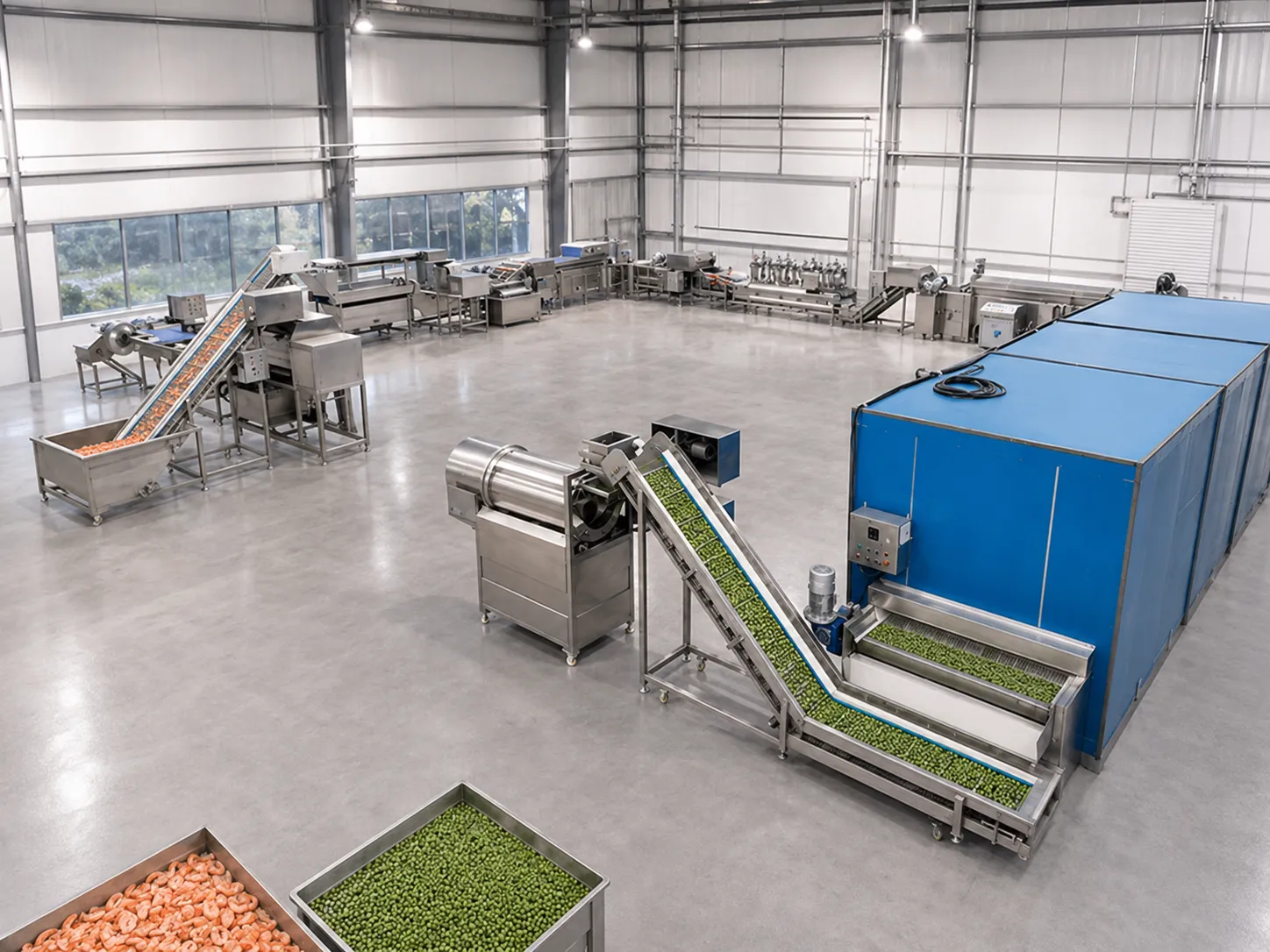
An IQF freezing line is usually not an isolated machine. It is often part of a complete frozen food processing system.
Before purchasing the equipment, you should check how the freezing line will connect with the machines before and after it.
A typical frozen food production flow may include:
Raw Material → Washing → Cutting → Blanching → Cooling → Dewatering → IQF Freezing → Packaging → Cold Storage
For frozen French fries, the process may include:
Potato Washing → Peeling → Cutting → Blanching → Dewatering → Frying → Cooling → IQF Freezing → Packaging
In this type of production line, an industrial continuous fryer is usually installed before the cooling and freezing sections.
For fruits such as strawberries and blueberries, the process may include:
Sorting → Washing → Air Drying → Inspection → IQF Freezing → Packaging
For fruit and vegetable products, the upstream washing stage can be connected with a Vegetable & Fruit Washing Processing Line before products enter the IQF freezer.
Factory layout should consider:
- Workshop length and width
- Drainage system
- Power supply
- Refrigeration room location
- Distance to cold storage
- Packaging area
- Worker operation space
- Cleaning access
- Maintenance space
- Product transfer direction
A reasonable layout can reduce unnecessary material handling, improve hygiene, save labor, and make daily production more efficient.
---
9. Cleaning, Hygiene, and Food Safety
For frozen food equipment, easy cleaning and hygienic design are very important.
When selecting an IQF freezing line, check whether the equipment supports:
- Food-grade stainless steel construction
- Easy-open inspection doors
- Convenient belt cleaning
- Smooth internal surfaces
- Good drainage design
- Anti-corrosion structure
- Cleanable product-contact parts
- Safe electrical control system
- Maintenance-friendly design
In frozen food factories, cleaning is not only about keeping the machine looking good. It is directly related to food safety, equipment service life, and customer requirements.
For export-oriented frozen food factories, hygienic design is especially important because buyers often pay close attention to food safety standards and production environment.
---
10. Which Products Are Suitable for IQF Freezing?
Industrial IQF freezing lines can be used for many types of food products.
Vegetables
- Green beans
- Peas
- Corn
- Broccoli
- Spinach
- Peppers
- Carrots
- Mixed vegetables
Fruits
- Strawberries
- Blueberries
- Mango chunks
- Pineapple chunks
- Banana slices
- Fruit cubes
Seafood
- Shrimp
- Fish fillets
- Squid
- Scallops
- Seafood mixes
Meat and Poultry
- Chicken nuggets
- Meatballs
- Beef patties
- Chicken strips
- Prepared meat products
Prepared Foods
- Dumplings
- Spring rolls
- Pasta
- Rice products
- Ready meals
Frozen Snacks
- French fries
- Potato wedges
- Onion rings
- Fried snacks
- Coated products
If your factory also produces potato snack products, you may also be interested in the Potato Chips Production Line and French Fries Production Line.
Different products require different belt speed, air temperature, feeding thickness, and freezing time. This is why customized design is often necessary for industrial frozen food processing projects.
---
11. What Information Should You Provide Before Requesting a Quote?
To receive an accurate IQF freezing line quotation, you should prepare the basic production information in advance.
Important information includes:
- Product name and type
- Product size and shape
- Required capacity
- Product temperature before freezing
- Required final product temperature
- Moisture content
- Whether the product is blanched, fried, cooked, or pre-cooled
- Factory layout drawing
- Local voltage and frequency
- Refrigeration system preference
- Packaging method
- Cold storage arrangement
- Destination country
With these details, engineers can recommend a suitable tunnel size, belt width, refrigeration capacity, machine configuration, and layout design.
If only the price of an IQF freezer is requested without product details and capacity information, the supplier can usually provide only a rough reference price.
---
12. How to Choose a Reliable IQF Freezing Line Supplier
A reliable IQF freezing line supplier should not only provide the freezer itself. They should also understand the production process and help you build a practical frozen food processing solution.
When choosing a supplier, check whether they can provide:
- Product freezing process analysis
- Capacity planning
- Customized freezer design
- Factory layout support
- Refrigeration system matching
- Food-grade stainless steel construction
- PLC control system
- Installation guidance
- Operator training
- Spare parts supply
- After-sales technical support
You can also view more real installation experience from Simplot’s food processing equipment projects page.
For international buyers, after-sales support, installation guidance, and spare parts supply are especially important.
An IQF freezing line is a long-term investment. Choosing the right supplier can help reduce production risk, improve production efficiency, and make the factory easier to operate in the future.
---
Conclusion
Choosing the right IQF freezing line requires careful consideration of product type, production capacity, freezing temperature, belt width, conveyor speed, refrigeration system, factory layout, hygiene requirements, and future expansion plans.
A well-designed IQF Freezing Line can help food processing factories:
- Improve freezing efficiency
- Maintain product shape and texture
- Reduce product sticking
- Support continuous production
- Make weighing and packaging easier
- Extend product shelf life
- Build a stable frozen food processing system
Simplot provides customized IQF freezing line solutions for vegetables, fruits, seafood, meat products, prepared foods, French fries, frozen snacks, and other frozen food processing applications.
If you are planning to build a new frozen food factory or upgrade your existing freezing section, you can share your product type, required capacity, factory size, and freezing requirements with us. Our engineering team will help design a suitable IQF freezing solution for your production needs.