Frozen vegetables are one of the most common products in modern cold chain food processing. For factories producing frozen corn, peas, cabbage, mixed vegetables, diced fruit or other small-piece products, a well-planned frozen vegetable processing line helps improve product quality, reduce labor handling and make packaging more stable.
This guide explains how to plan a complete pre-frozen food processing line for vegetable products, including washing, cutting, blanching, cooling, dewatering, IQF freezing and automatic packaging.
Start With Product Type and Capacity
The first step is to confirm what products will be processed and how much output the factory needs per hour. A frozen corn line, frozen pea line and frozen cabbage line may all include washing, blanching and freezing, but the feeding method, cutting requirement, blanching time and dewatering design can be different.
For example, a frozen corn processing line usually focuses on kernel cleaning, blanching, cooling and uniform feeding before IQF freezing. A leafy vegetable project may need gentler conveying, better drainage and more attention to product breakage.
Typical Frozen Vegetable Process Flow
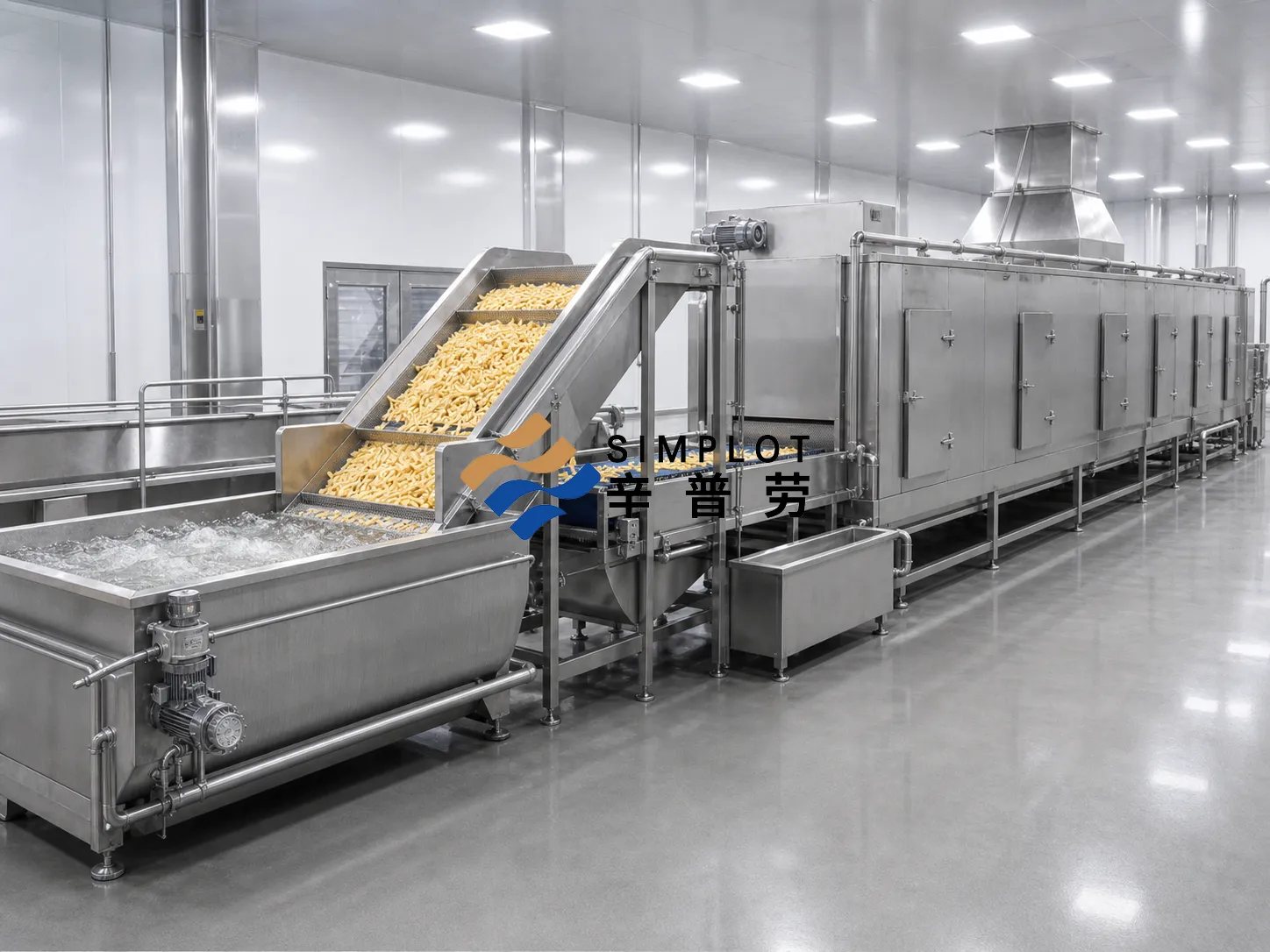
A complete frozen vegetable line is usually designed around the following process: raw material receiving, sorting, washing, cutting or trimming, blanching, cooling, dewatering, inspection, IQF freezing, weighing, packaging and cold storage.
The exact process should be adjusted according to product characteristics. Corn, peas and diced vegetables need uniform feeding before freezing. Leafy vegetables need careful washing and moisture removal. Fruit dice products need gentle transfer to protect shape and surface.
Key Equipment in the Line
- Washing equipment: removes soil, leaves and surface impurities before further processing.
- Cutting or trimming machines: prepare vegetables into the required size for freezing and packaging.
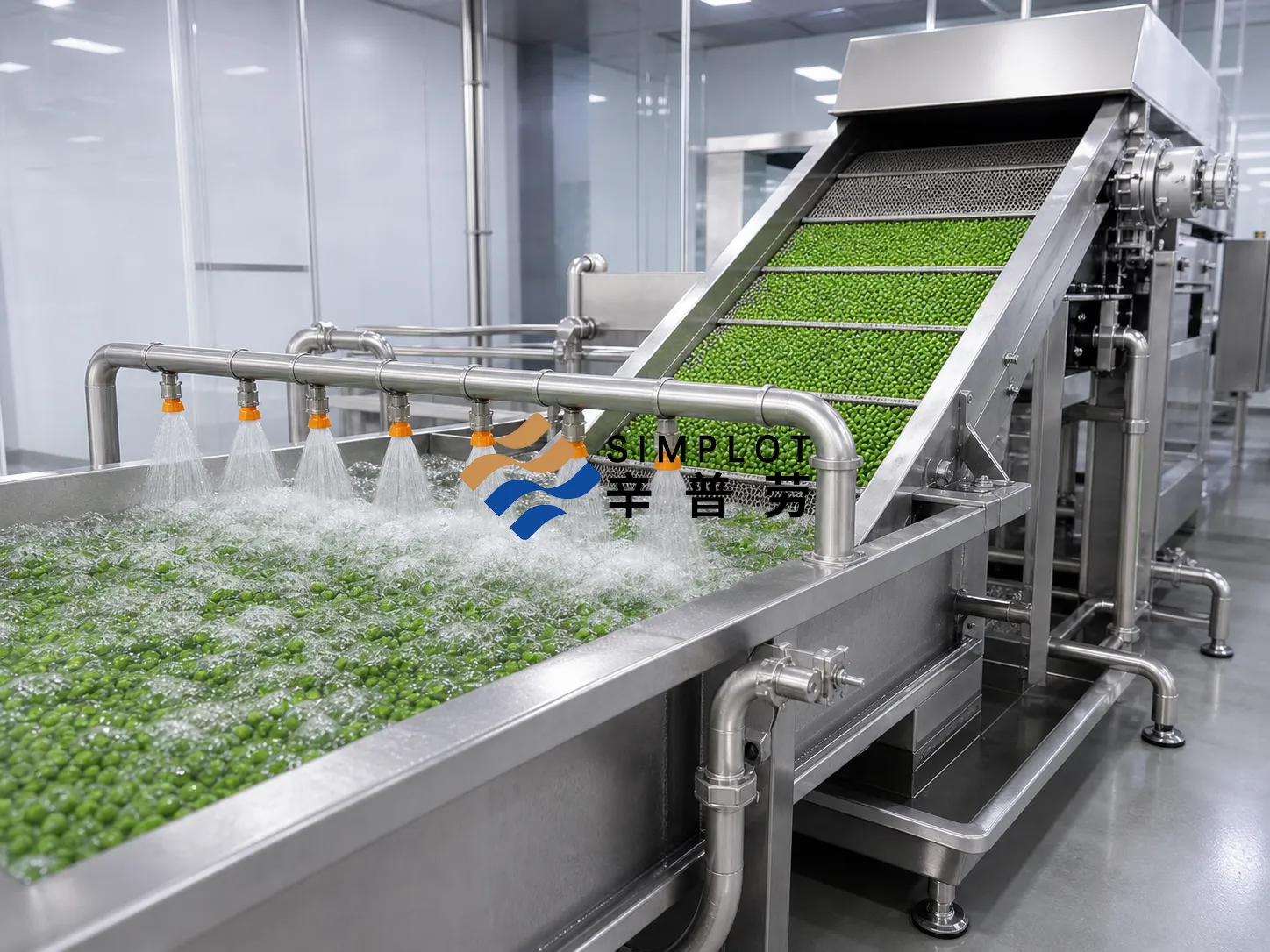
- Blanching machine: stabilizes color, texture and enzyme activity before freezing.
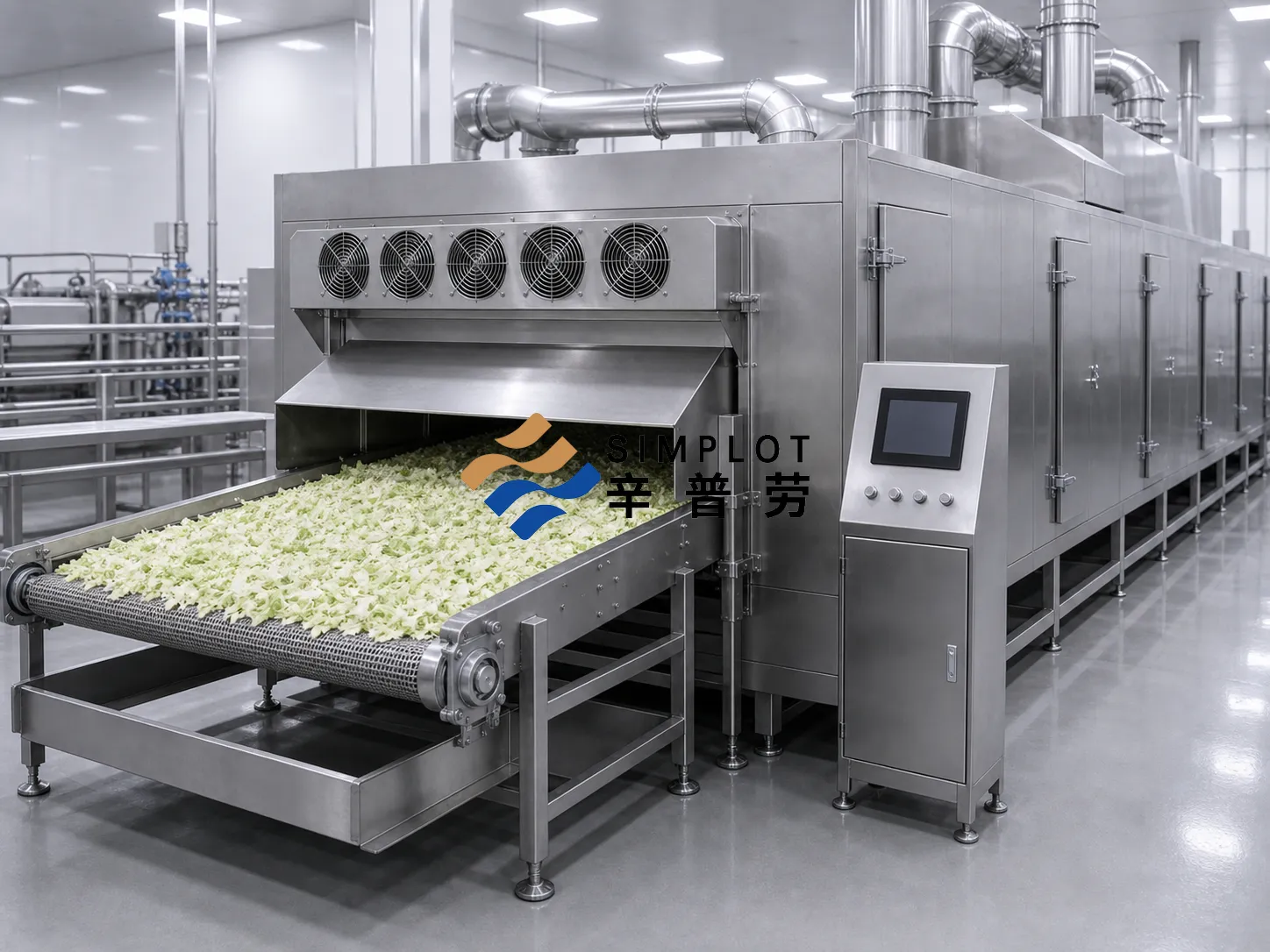
- Cooling system: reduces product temperature after blanching and prepares products for freezing.
- Dewatering equipment: removes surface water so products enter the freezer with a suitable moisture level.
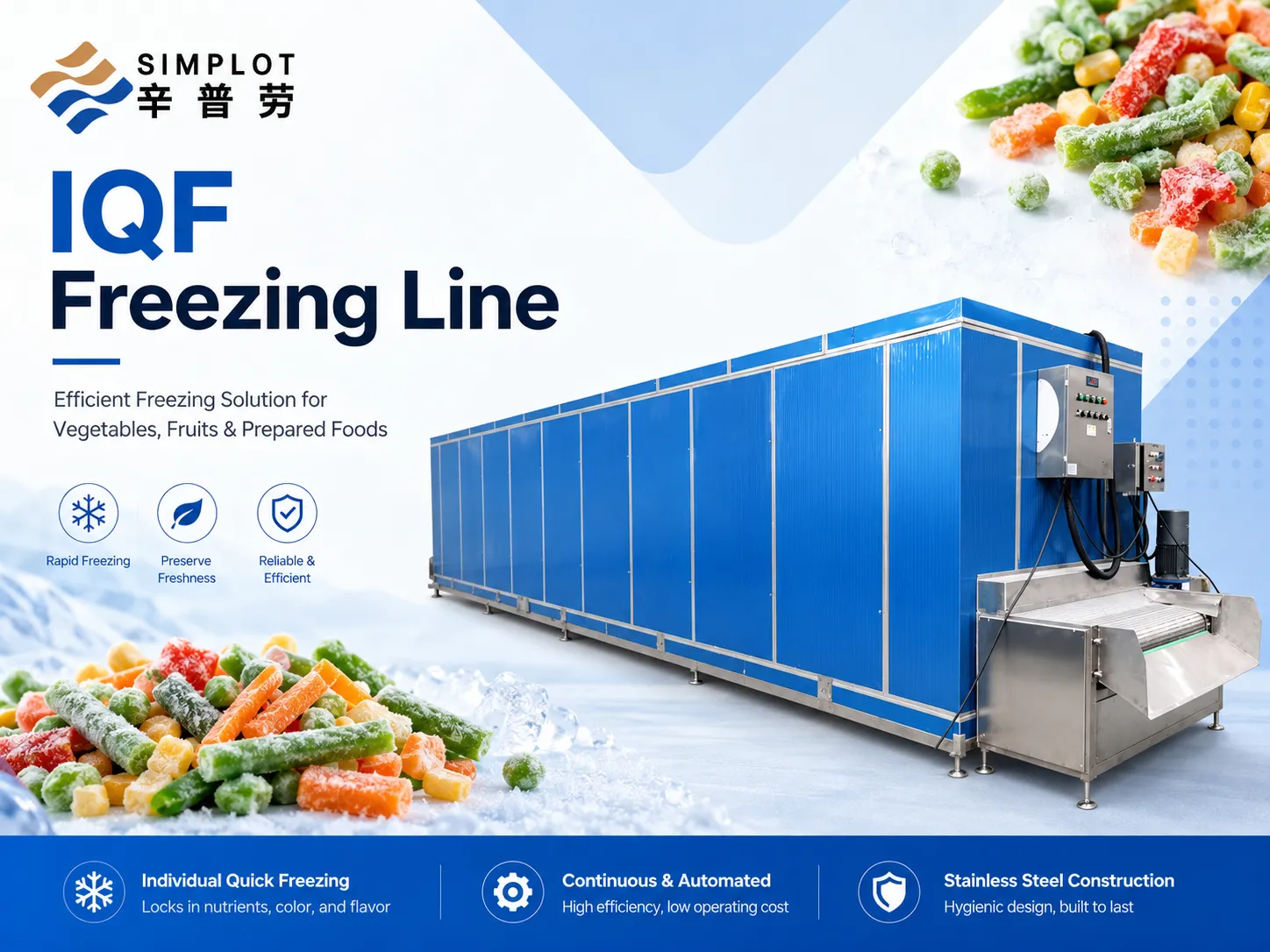
- IQF freezer: freezes products individually to reduce clumping and improve packaging efficiency.
- Packaging machine: completes weighing, filling and sealing for finished frozen products.
For products such as peas or small vegetable pieces, the frozen pea processing line can be a useful reference because it requires stable feeding and individual freezing performance.
Why Blanching and Cooling Matter
Blanching is one of the most important stages in many frozen vegetable production lines. It helps stabilize product color, reduce enzyme activity and prepare the product for long-term frozen storage. If blanching is too short, product quality may become unstable. If it is too long, texture and nutrients may be affected.
After blanching, products should be cooled quickly. Proper cooling helps reduce thermal load before IQF freezing and improves final freezing efficiency. This is especially important for medium and large capacity factories where freezing energy consumption affects operating cost.
Factory Layout and Hygiene Planning
A frozen vegetable processing line should separate raw material handling, washing, cooked or blanched product areas, freezing, packaging and cold storage. The layout should allow smooth product flow, easy cleaning, drainage, maintenance space and worker access.
Food-contact parts should use stainless steel, and the equipment should be easy to clean after production. For export-oriented frozen vegetable factories, hygienic design and stable cold chain preparation are just as important as machine capacity.
How to Choose the Right Configuration
Before requesting a quotation, prepare the product type, required capacity, product size, packaging format, factory layout, voltage and final product temperature requirement. These details help engineers match the right washing machine, blanching machine, cooling system, IQF freezer and packaging equipment.
If your project also includes fruit dice or mixed frozen products, compare the equipment configuration with a frozen fruit dice processing line. For buyers still comparing freezing systems, the guide on choosing the right IQF freezing line can help clarify freezer capacity and layout decisions.
Planning a New Frozen Vegetable Project
A good frozen vegetable processing line is not only a list of machines. It is a coordinated system that balances raw material condition, production capacity, product quality, freezing performance, hygiene and packaging efficiency.
If you are planning a new frozen vegetable factory or upgrading an existing line, share your product type, hourly capacity, workshop layout and package size through the contact page. Our engineering team can help design a suitable processing flow and equipment configuration.